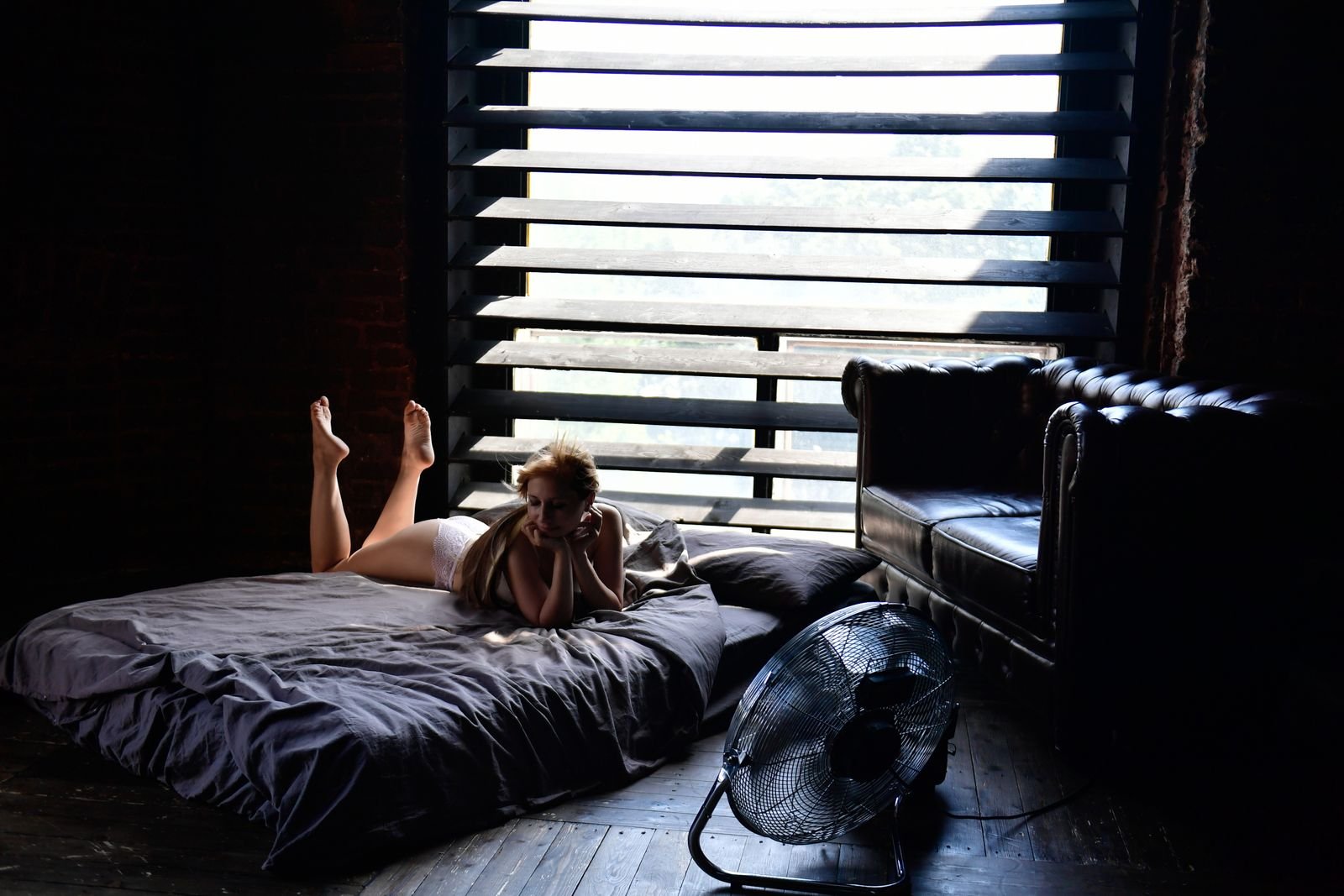
Why Are Hot Flashes Worse at Night?
This article contains affiliate links. As an Amazon Associate, we earn from qualifying purchases, at no extra cost to you. Learn more.
Hot flashes often feel worse at night because your body’s comfort window for temperature has shrunk, and bedtime is exactly when your core temperature is shifting, your bedding is holding heat against you, and evening habits like wine or a late dinner add a little more. Under the covers you cannot react early by peeling off a layer, so a small rise in heat turns into a full sweat that wakes you. Most of those night factors are things you can change, starting tonight.
| Night factor | What it does | What you can change |
|---|---|---|
| Narrow temperature comfort zone | A tiny heat rise tips you into sweating | Cooling buys margin; treatment can reduce flashes |
| Your body clock | Core temperature and heat release shift around bedtime | Time your evening cool down |
| Bedding and room | Insulation and still air trap heat and sweat | Lighter layers, airflow, a cooler room |
| Alcohol and late meals | Add heat and make sleep lighter | Earlier dinners, less evening alcohol |
| Waking itself | You notice night flashes, then lie awake | A simple back to sleep routine |
What actually triggers a hot flash at night?
Your brain keeps core temperature inside a small band. Above the top of that band you sweat; below the bottom you shiver. The space in between is called the thermoneutral zone, and in women with hot flashes it is much narrower than usual.
In a 1999 study by researcher Robert Freedman in the American Journal of Obstetrics and Gynecology, 12 postmenopausal women with hot flashes had a core temperature gap between their sweating and shivering thresholds of about 0.0 degrees Celsius, compared with about 0.4 degrees in 8 women without symptoms. In other words, almost no buffer. His later review describes hot flashes as triggered by small rises in core temperature acting within this greatly reduced zone, caused in part, but not entirely, by falling estrogen. Newer research points to overactive brain cells in the hypothalamus that signal through a messenger called neurokinin B, the pathway the medicines fezolinetant and elinzanetant block.
How does your body clock make nights harder?
Core body temperature follows a daily rhythm. It falls through the evening and reaches its lowest point in the early morning hours. To make that drop, your body opens blood vessels in your hands and feet and releases heat through the skin, which helps you fall asleep but can feel a lot like the start of a flash.
Freedman’s team also tracked hot flashes around the clock. In a small 1995 study in the Journal of Clinical Endocrinology and Metabolism, 10 women with symptoms had hot flashes that peaked at about 6:30 in the evening, and most came just after a small rise in core temperature. Ten women is a tiny sample, so treat this as a clue, but it fits a common pattern of rough evenings.
Are night sweats worse in the first half of the night?
Possibly. In a 2006 sleep lab study published in Menopause, Freedman and Timothy Roehrs found that women with hot flashes had more arousals and awakenings than comparison groups during the first half of the night, and there the flash usually came before the waking. In the second half the pattern reversed, and the researchers concluded that REM sleep, which is more common toward morning, seems to suppress hot flashes. A room at 18 degrees Celsius (about 64 degrees Fahrenheit) also meant fewer flashes in the first half of the night than warmer rooms.
- Front load your cooling. The first three to four hours of sleep are where a cool room and light bedding matter most.
- Look at what wakes you near dawn. If you wake at 4 a.m. and only then feel hot, the waking may have come first, from a full bladder, alcohol wearing off or a busy mind.
Why do your bed and bedroom hold so much heat?
At night small heat sources stack up: a thick comforter, memory foam, a partner, a pet, a closed door. Awake, you would notice and take off a sweater. Asleep, the heat keeps climbing until it crosses your threshold, and heavy bedding then holds the sweat against your skin.

Still air makes it worse, because sweat cools you only when it evaporates. A small fan speeds that up.
- Heavy comforter: swap for two light layers you can kick off one at a time.
- Synthetic or sateen sheets: try cotton percale or linen, which breathe and dry faster.
- No airflow: crack a window or aim a fan at your upper body.
We cover the full room and bedding setup in how to sleep cool with night sweats.
Do alcohol and late meals really make night sweats worse?
For many women, yes, though not for everyone. Alcohol widens blood vessels in the skin, which is why a drink can leave you flushed, and it is one of the most commonly reported hot flash triggers. It also makes sleep lighter and more broken later in the night as it wears off, so even if it helps you nod off, it sets you up to wake.

Food matters too. Digesting a meal generates heat, and a large, rich dinner close to bedtime keeps that going as you lie down. Spicy food and hot drinks are other commonly reported triggers, and a hot shower right before lights out can leave you warm as you get into bed. The only way to know your own pattern is to test it for two weeks. Our guide to finding your hot flash triggers shows you how.
What does a good night plan for hot flashes look like?
Here is a simple evening timeline. Pick the steps that match your log.
| When | What to do | Why it helps |
|---|---|---|
| 3 to 4 hours before bed | Finish a moderate dinner; go easy on spice if it bothers you | Less digestive heat at bedtime |
| 2 to 3 hours before bed | Make any alcoholic drink your last, or test a week without | Fewer flushes, less broken sleep |
| 1 to 2 hours before bed | Warm, not hot, shower; lower the thermostat; start the fan | You start cooling before you lie down |
| 30 minutes before bed | Light sleepwear; set out cold water, a spare top and a towel | Everything is in reach mid sweat |
| Lights out | Two light layers; fan on your upper body | Protects the first half of the night |
| If a flash wakes you | Kick off a layer, sip water, swap a damp top, breathe slowly, leave the phone | Shorter wake up, less chill |
| Awake more than about 20 minutes | Get up, keep lights low, do something calm, return when sleepy | Keeps bed linked with sleep |
For the moment a flash hits, see what to do during a hot flash.
What might this look like on a real week night?
Here is a worked example. Say you go to bed at 10:30 and usually wake hot around midnight and again around 3. For two weeks you eat by 7, keep wine to weekends, shower at 8:30 instead of 10:15, and run the fan with the thermostat a few degrees lower. Your log shows the midnight wake up gone except after Saturday wine, while the 3 a.m. waking barely changes. Evening heat likely drove the early flash; the later waking is worth raising with your doctor.
What are the most common night time mistakes?
| Common mistake | What to do instead |
|---|---|
| A heavy duvet because you get chilled after a sweat | Two light layers and a dry top by the bed |
| A nightcap to help you fall asleep | Skip it on test nights; it often causes later wakings |
| Checking the clock or phone after every flash | Turn the clock away; screens wake you further |
| A full cold shower at 2 a.m. | A cool damp cloth on your neck, then back to bed |
| Fixing only the bedroom when flashes wake you most nights | Talk to your doctor; effective treatments exist |
When should you see a doctor?
If hot flashes wake you most nights, book a visit. Hormone therapy is the most effective treatment for hot flashes and night sweats, according to The Menopause Society, though it is not right for everyone. The Society’s 2023 non-hormone position statement also supports cognitive behavioral therapy, clinical hypnosis, certain antidepressants, gabapentin (which it notes may suit night symptoms because it can cause drowsiness) and fezolinetant, and elinzanetant was approved by the FDA in 2025. Compare them in hot flash treatments ranked.
See a doctor promptly if night sweats come with any of these:
- Fever, chills or feeling unwell
- Unexplained weight loss
- Swollen glands or a lasting cough
- A start soon after a new medicine
- Loud snoring, gasping or pauses in breathing
- A sudden return years after your hot flashes stopped
Want a full explainer on hot flashes and night sweats?
Cleveland Clinic explains vasomotor symptoms, the medical name for hot flashes and night sweats, and how they are treated.
What can make hot nights easier to sleep through?
None of these stops a hot flash, but they target the night factors above: room temperature, airflow and fabrics that trap heat. Our picks:
- ThermoPro TP50 Indoor Thermometer: Shows your bedroom’s real temperature and humidity, so you can check whether warmer nights line up with your worse nights. Check price on Amazon
- DREO Tower Fan: A quiet oscillating fan with a remote, so you can turn up the airflow mid sweat without getting out of bed. Check price on Amazon
- RUVANTI 100% Cotton Percale Sheets: Crisp, breathable percale that feels cooler than sateen or microfiber, a good fit if your current sheets feel clammy. Check price on Amazon
- WiWi Lightweight Pajama Set: Light pajamas that dry faster than heavy cotton, helpful if the chill after a sweat is what keeps you awake. Check price on Amazon
Frequently asked questions
Why do I only get hot flashes at night?
Some women notice them mostly at night because heat builds under the covers and a flash that breaks sleep is hard to forget. Daytime flashes can be milder and easier to shrug off. A two week log of day and night symptoms usually gives a clearer picture.
Is it normal to feel freezing right after a night sweat?
Yes. A hot flash dumps heat fast, and wet skin and damp sheets keep cooling you after it ends. A dry top and one light layer usually fix the chill without overheating you again.
What bedroom temperature is best for night sweats?
There is no single right number, but cooler beats warmer. In one sleep lab study, a room at about 64 degrees Fahrenheit meant fewer hot flashes in the first half of the night than warmer rooms. Use the coolest setting you can sleep comfortably in.
Does a cooling pillow help with night sweats?
It can make your head and neck more comfortable, but it does little for the core heat behind a flash. Airflow, lighter bedding and a cooler room usually matter more, so start there.
How many years do night time hot flashes last?
It varies widely. A 2015 JAMA Internal Medicine analysis of the SWAN study found that hot flashes and night sweats lasted a median of 7.4 years in total. See how long hot flashes last for what affects duration.
Sources and further reading
- Menopausal hot flashes: mechanisms, endocrinology, treatment, Journal of Steroid Biochemistry and Molecular Biology (PubMed Central)
- Hot Flashes, The Menopause Society
- Night Sweats: Menopause, Other Causes and Treatment, Cleveland Clinic
- Menopause symptoms and relief, Office on Women’s Health, HHS
- Menopause, MedlinePlus, National Library of Medicine
A quick note: this is general health information, not medical advice. Talk with your doctor before starting, stopping, or changing any treatment.


