Menopause and Body Temperature Regulation: Why Your Internal Thermostat Changes
This article contains affiliate links. As an Amazon Associate, we earn from qualifying purchases, at no extra cost to you. Learn more.
Menopause changes body temperature regulation because falling estrogen frees up a small cluster of brain cells that feed into your hypothalamus, the body’s thermostat. The comfortable band between “start sweating” and “start shivering” shrinks, so a tiny rise in core temperature sets off a full cool down response. That response is a hot flash, and the chill that often follows is the system overshooting.
- The thermostat: the preoptic area of the hypothalamus decides when to sweat and when to shiver.
- The change: the gap between those two decisions, the thermoneutral zone, narrows sharply in women with hot flashes.
- The messenger: KNDy neurons, normally kept in check by estrogen, become overactive and signal through neurokinin B.
- The payoff: that discovery led to NK3 blocking drugs and explains why small cooling habits help.
How does your body’s thermostat normally work?
Your brain constantly compares core temperature with readings from your skin. The control center, in the hypothalamus near the base of the brain, works with two trigger points: a sweating threshold above your normal core temperature and a shivering threshold below it.
The space between those trigger points is the thermoneutral zone. Inside it, your body makes quiet adjustments, mostly by widening or narrowing blood vessels in the skin. Only past a threshold does it sweat to dump heat or shiver to make it.

A wide zone is forgiving. A hot cup of tea or a brisk walk nudges your core temperature, and the system absorbs it without drama.
What changes in the thermostat at menopause?
The zone shrinks. In a small 1999 study in the American Journal of Obstetrics and Gynecology, Robert Freedman and William Krell measured the sweating and shivering thresholds in 12 postmenopausal women with hot flashes and 8 without. Measured by core temperature, the zone was about 0.4 degrees Celsius wide in women without symptoms and close to zero in women with them.
In other words, a woman with hot flashes may have almost no buffer. Freedman’s later review in the Journal of Steroid Biochemistry and Molecular Biology (2014) describes hot flashes as an exaggerated heat release response triggered by small rises in core temperature acting within this greatly reduced zone. The review notes that falling estrogen explains part, but not all, of the change, and that higher activity in the brain’s stress (sympathetic) system also narrows the zone.
What does the thermostat look like before and after?
| Feature | Before the transition | With menopausal hot flashes |
|---|---|---|
| Comfort band | Wide enough to absorb a warm room, a hot drink or a walk | So narrow that a small rise crosses the sweating line |
| What sets off sweating | A meaningful rise in core temperature | A small rise, often one you would never feel |
| The response | Gradual, mild sweating | Sudden flushing, heavy sweating, sometimes a racing heart |
| Afterward | Temperature settles back | Overshoot into chills, occasionally shivering |
| The brain signal | Estrogen keeps KNDy neurons in check | KNDy neurons overactive, more neurokinin B signaling |
What happens, step by step, during a hot flash?
- Core temperature rises slightly, perhaps from a warm room, a meal, stress or simply the body’s daily rhythm.
- Because the sweating threshold now sits so close, the thermostat reads that small rise as overheating.
- It orders heat release: blood rushes to the skin of the face, neck and chest, and sweat glands switch on.
- Skin temperature jumps, which is the intense heat you feel, while core temperature barely changes.
- Heat pours out faster than needed, core temperature dips, and you may feel chilled or shiver.
What are KNDy neurons, and why do they matter?
KNDy (pronounced “candy”) neurons sit in a part of the hypothalamus called the arcuate nucleus. The name comes from three chemical messengers they make: kisspeptin, neurokinin B and dynorphin. Their day job is reproductive: they help drive pulses of luteinizing hormone (LH), and estrogen feeds back to keep them in check.
When estrogen falls at menopause, that brake weakens. A 2013 review in Frontiers in Neuroendocrinology by Naomi Rance and colleagues pulled the evidence together. It described marked changes in these neurons in postmenopausal women and laid out animal findings that connect them to temperature control:
- In rats, KNDy neurons send connections to the preoptic thermostat area, which carries the NK3 receptor, the main receptor for neurokinin B.
- Activating NK3 receptors in one part of that area, the median preoptic nucleus, lowered body temperature by switching on heat loss.
- Removing KNDy neurons reduced heat release through the skin and partly blocked estrogen’s effects on temperature.
The authors proposed that KNDy neurons relay estrogen’s signal to the thermostat, and that without estrogen they flip the heat loss switch too easily. It fits an older observation that hot flashes tend to line up with LH pulses. Much of the detail comes from animal work, but drug trials in women have since backed up the central idea.
Why do NK3 drugs target this pathway?
If extra neurokinin B signaling through NK3 receptors flips the heat loss switch, blocking that receptor should calm it without adding estrogen. That is exactly the design of the newest nonhormonal treatments.
- Fezolinetant (Veozah): in May 2023 the FDA approved it as the first neurokinin 3 receptor antagonist for moderate to severe hot flashes caused by menopause. It requires liver blood tests before and during treatment.
- Elinzanetant (Lynkuet): approved by the FDA in 2025, it blocks both the NK1 and NK3 receptors.
Because they act only on this circuit, these drugs do not do the other things estrogen does, such as protecting bone or easing vaginal dryness. Estrogen therapy is thought to work further upstream, restoring the brake on the KNDy neurons, which is one reason it remains the most effective treatment for many women. Our guides to non-hormonal prescriptions for hot flashes and hormone therapy for hot flashes compare the trade offs to discuss with your doctor.
Why do you feel cold after a hot flash?
A hot flash releases heat in a rush as skin blood vessels open wide and sweat evaporates. The response is out of proportion to the tiny rise that started it, so core temperature can fall slightly below where it began.
With a narrow zone, the shivering threshold is close by too. Damp skin plus a slightly lowered core temperature is enough to tip some women into chills or even shivering. That is why a removable layer often beats simply dressing lighter: you need to shed heat fast, then hold onto it a few minutes later.
What does a narrow comfort zone mean in daily life?
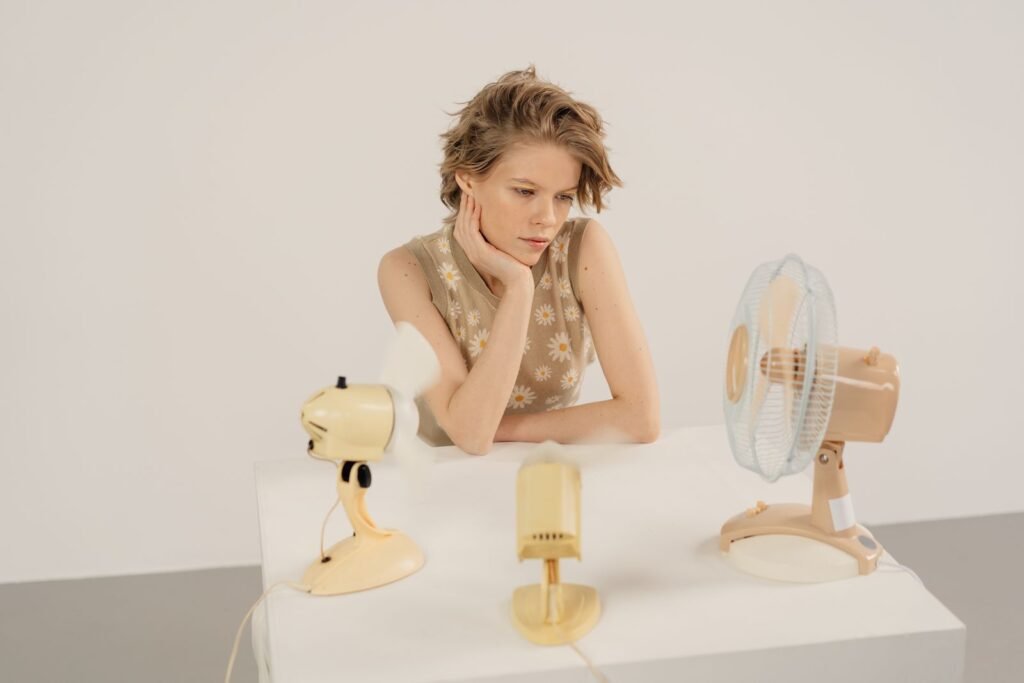
If small heat loads set off hot flashes, trimming them gives you breathing room. Freedman’s 2014 review notes that cooling the body from the outside eases hot flashes, and it carries no side effects.
| Heat load | Why it matters now | What to try |
|---|---|---|
| Warm bedroom or heavy bedding | Adds steady heat for hours while you sleep | Cooler room, breathable sheets, a small fan aimed at you |
| Hot drinks, alcohol, big spicy meals | Add heat or widen skin blood vessels | Notice which ones set you off; switch to iced drinks |
| Exercise | Raises core temperature directly | Keep moving, but in cooler settings with water nearby |
| Stress | Sympathetic activity narrows the zone further | CBT or clinical hypnosis, both backed by The Menopause Society |
| Fixed, heavy clothing | Traps heat and leaves you damp afterward | Thin layers you can remove and replace |
Exercise deserves a note. In the 1999 Freedman study, every woman with symptoms had a hot flash during the exercise session and none of the symptom free women did. Exercise is still good for you; a cool space, cold water and a fan just make it easier, as our article on whether exercise helps hot flashes explains.
What would we try first, and why?
Start with your bedroom, because that is where a narrow zone costs you sleep. Check the real temperature with a thermometer, lower it if you can, aim a quiet fan at the bed and keep a cold drink on the nightstand. Our guide to why hot flashes are worse at night covers the role of your body’s daily temperature rhythm, and our roundup of cooling gear for hot flashes compares fans and other tools.
Which common beliefs does the thermostat model correct?
- “A hot flash means I have a fever.” Skin temperature soars, but core temperature barely moves, so a thermometer usually reads normal.
- “Slow breathing will reset my thermostat.” Early lab studies were promising, but larger trials were not, and The Menopause Society’s 2023 nonhormone statement does not recommend paced breathing for hot flashes.
When should you see a doctor?
- Hot flashes or night sweats regularly wake you or disrupt work
- You feel hot all the time, not in waves, especially with weight loss, shakiness or a racing heart at rest (thyroid problems can do this)
- A thermometer shows a fever, or you have night sweats with weight loss or swollen glands
- Hot flashes begin before 40, or start after a new medicine
Want a doctor to explain hot flashes and night sweats?
Dr. Sherry of QuickMD explains why hot flashes and night sweats happen and what helps.
What helps you stay comfortable when your thermostat is touchy?
With a narrow comfort zone, small adjustable tools you control beat big changes. These are the ones that fit this article best.
- ThermoPro TP50 Indoor Thermometer: Shows your room’s actual temperature and humidity, so you can see whether the bedroom is as cool as you think. Check price on Amazon
- Genesis Clip Fan: Clips to a headboard, shelf or desk so airflow lands right on your skin, which is where heat release happens. Check price on Amazon
- Amazon Essentials Lightweight Open-Front Cardigan: Comes off in seconds when the heat hits and goes back on when the chill follows. Good for anyone who swings hot then cold. Check price on Amazon
- Owala FreeSip Insulated Water Bottle: Keeps water icy for hours, so a cold drink is always within reach on your desk or nightstand. Check price on Amazon
Frequently asked questions
Does menopause permanently change how my body handles heat?
For most women, no. Hot flashes usually fade over several years as the brain adapts to lower estrogen, though some women have them much longer.
Why do I feel burning hot when my thermometer says normal?
During a hot flash, blood floods the skin and skin temperature rises sharply, but core temperature changes very little. A mouth or ear thermometer measures something closer to core temperature, so it usually stays normal.
Can menopause make me feel cold more easily too?
Some women notice it. A narrow zone means the shivering threshold sits close to normal body temperature as well, and the cooling after a hot flash can push you past it. If you feel cold all the time, ask your doctor about other causes such as an underactive thyroid.
Is the KNDy explanation proven?
The core idea is well supported. It rests on human brain tissue studies, a large body of animal research and the success of NK3 blocking drugs in clinical trials. Researchers are still working out details, such as why some women have far worse symptoms than others.
Do NK3 drugs lower your body temperature?
They are designed to calm the overactive signal that triggers heat release, not to cool you down in general. Your doctor can explain how they compare with other options for you.
Sources and further reading
- Reduced Thermoregulatory Null Zone in Postmenopausal Women With Hot Flashes, American Journal of Obstetrics and Gynecology, 1999
- Menopausal Hot Flashes: Mechanisms, Endocrinology, Treatment, Journal of Steroid Biochemistry and Molecular Biology, 2014
- Modulation of Body Temperature and LH Secretion by Hypothalamic KNDy Neurons, Frontiers in Neuroendocrinology, 2013
- FDA Approves Novel Drug to Treat Moderate to Severe Hot Flashes Caused by Menopause, U.S. Food and Drug Administration
- The 2023 Nonhormone Therapy Position Statement of The North American Menopause Society, Menopause, 2023
- Hot Flashes, The Menopause Society
A quick note: this is general health information, not medical advice. Talk with your doctor before starting, stopping, or changing any treatment.