Best Cooling Sheets for Menopause Night Sweats: What Actually Feels Cooler
This article contains affiliate links. As an Amazon Associate, we earn from qualifying purchases, at no extra cost to you. Learn more.
The coolest sheets for menopause night sweats pair a breathable fiber with a light, airy weave: cotton percale, linen, or a lyocell or bamboo-derived rayon sheet. They feel cooler because heat and sweat can escape instead of building up against your skin. No sheet stops night sweats, but the right one helps you dry off and get back to sleep faster.
| If this sounds like you | Start with |
|---|---|
| You want a crisp, hotel feel and easy care | Cotton percale |
| You wake up soaked and want the fastest drying | Linen |
| You love a silky, smooth sheet | Lyocell or bamboo-derived rayon |
| You are on a tight budget | Cotton percale (skip microfiber) |
| Your partner runs cold | Percale plus separate light blankets on each side |
Why do some sheets feel so much hotter than others?
When a night sweat hits, your body is trying to shed heat through your skin. Sweat cools you only when it can evaporate. A sheet that traps air and holds moisture slows that process, so you lie in a warm, damp pocket and wake up clammy once the flash passes.
Four things decide how a sheet handles this: the fiber, the weave, the weight of the fabric, and how fast it dries. Marketing words like “cooling” tell you very little about any of them. If you want the background on why flashes cluster after dark, see why hot flashes are worse at night.
Is percale or sateen cooler?
Percale is usually cooler. It uses a simple one-over, one-under weave, which makes a matte, crisp fabric with a lot of tiny gaps for air. Sateen floats several threads over one, so more yarn sits on the surface. That gives it a smooth, slightly shiny feel and a heavier drape that hugs your body and holds warmth.

- Percale: crisp, breathable, sleeps cool, wrinkles easily, can feel a little stiff until washed a few times.
- Sateen: silky, warmer, resists wrinkles better, a good choice for a cool bedroom but not ideal if you run hot.
If you like the feel of sateen, you do not have to give it up. Pair it with lighter layers on top, or save it for winter.
How do linen, bamboo-derived rayon, and lyocell compare?
Linen
Linen is made from flax. Its yarns are thicker and its weave is looser than most cotton, so air moves through it easily, and it absorbs moisture and dries quickly. It starts out a bit rough and softens with every wash. The downsides are price, a heavily wrinkled look, and a texture some people never warm to.
Bamboo-derived rayon
Most sheets sold as “bamboo” are rayon or viscose: bamboo pulp is chemically dissolved and spun into a new fiber. The Federal Trade Commission expects these products to be labeled as rayon or viscose made from bamboo, so read the fiber line, not the headline. The fabric is silky and cool to the touch, which many hot sleepers love. It can pill, may be less durable than cotton, and usually needs gentler washing. Many are woven in a sateen or twill, so check the weave too.
Lyocell (Tencel)
Lyocell is another fiber made from wood pulp, produced with a solvent that is largely recovered and reused. Tencel is a brand name for lyocell. It feels smooth and handles moisture well, and it tends to cost more than rayon. We do not currently have a lyocell set in our picks, but it is worth a look if you like a silky feel and want something sturdier than rayon.
| Fabric | Breathability | Moisture handling | Durability | Easy care | Honest downside |
|---|---|---|---|---|---|
| Cotton percale | Very good | Good | Very good | Yes | Wrinkles, crisp feel not for everyone |
| Linen | Excellent | Excellent | Very good | Mostly | Pricier, very wrinkly, textured |
| Bamboo-derived rayon | Good | Good | Fair | Gentle wash | Can pill, cool feel fades as it warms |
| Lyocell (Tencel) | Good | Very good | Good | Gentle wash | Higher price |
| Cotton sateen | Fair | Good | Good | Yes | Denser weave holds heat |
| Polyester microfiber | Poor | Poor | Good | Yes | Traps heat and sweat |
The ratings are our editorial judgment based on fiber and weave, not lab testing.
Does a higher thread count mean cooler sheets?
No, and it can mean the opposite. Thread count is the number of threads in a square inch of fabric, counting both directions. Very high numbers are often reached by twisting several thin strands into each yarn and counting them separately, which makes a denser, heavier sheet without making it better.
- A common rule of thumb is that well-made percale sits in a moderate range, roughly 200 to 400.
- Linen is usually sold with a low thread count or none at all, because its yarns are thicker.
- For cooling, fiber and weave matter far more than the number on the package.
What do “cooling” claims on sheets actually mean?
Sometimes something real, often not much. Here is how to read the common phrases:
- “Cool to the touch”: the fabric feels cool when you first lie down. The effect fades within minutes as it warms to your skin.
- “Moisture wicking”: the fiber or a finish moves sweat away from your skin. Useful, but finishes can wear off with washing.
- “Temperature regulating”: vague. Look for what the fabric is and how it is woven.
- Red flag: a listing that never states the fiber content in plain words.
How do you choose the right set? A five-step plan
- Notice how you wake up. Mostly damp points to linen or percale. Mostly hot but dry means almost any breathable fiber will do.
- Pick the fiber using the quick table at the top of this page.
- Check the weave. Percale or linen for the coolest sleep, sateen only if you like it and can layer light.
- Buy one set first and sleep on it for two weeks before buying a second. Check the return policy before you open it.
- Add two spare pillowcases. Your head and neck often sweat most, and a fresh case is the fastest fix at 3 a.m.
How should you layer and care for cooling sheets?
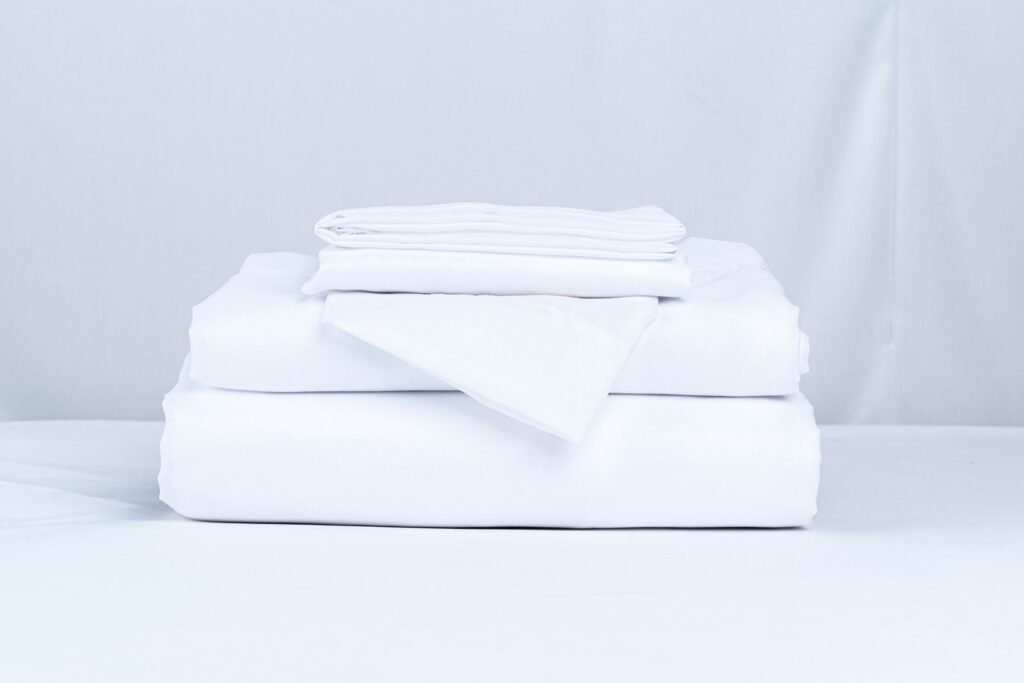
Good sheets work best as part of a light, flexible bed. Swap one heavy comforter for a top sheet and a thin blanket you can kick off and pull back. On heavy nights, some women lay a towel over the fitted sheet so they can pull it away instead of changing the whole bed.
- Wash in cool or warm water as the label says, and skip fabric softener and dryer sheets, which can leave a coating that reduces absorbency.
- Avoid over-drying. Pull linen and percale out slightly damp and smooth them by hand to cut wrinkles.
- Wash sheets weekly during heavy sweat weeks. Sweat and skin oils build up fast.
- Check your mattress protector. Plastic-backed waterproof protectors can trap heat, so look for a breathable one.
For the rest of the bedroom, from room temperature to sleepwear, see how to sleep cool with night sweats and what to wear with hot flashes.
What are the most common sheet buying mistakes?
| Mistake | What to do instead |
|---|---|
| Buying the highest thread count you can afford | Choose percale or linen in a moderate weight |
| Trusting “cooling” in the product name | Read the fiber content and weave |
| Keeping a heavy comforter year round | Layer a top sheet and a thin blanket |
| Expecting sheets to fix everything | Pair them with airflow and a cooler room |
Want to see cooling sheets compared?
Mattress Clarity compares cooling sheets for hot sleepers.
Which cooling sheets do we recommend?
These cover the three fabrics that sleep coolest, plus a pillow you can adjust. Pick by the feel you like best.
- RUVANTI 100% Cotton Percale Sheets: A crisp, all-cotton percale set for women who want a breathable, easy-care sheet without paying linen prices. Expect some wrinkling, as with any percale. Check price on Amazon
- French Linen Sheet Set: Our pick if you wake up damp, since linen breathes freely and dries fast. It suits women who like a relaxed, textured look and do not mind wrinkles. Check price on Amazon
- Bedsure Bamboo-Derived Rayon Sheets: A silky, smooth option for women who find cotton too crisp. Wash gently and skip high dryer heat to help limit pilling. Check price on Amazon
- Coop Home Goods Adjustable Pillow: Shredded fill you can add or remove to get the height right, which tends to breathe better than a solid foam block. Pair it with a percale or linen pillowcase. Check price on Amazon
When should you see a doctor?
Night sweats are common in perimenopause and after, but they can also have other causes. Talk with a doctor soon if your sweats come with fever, unexplained weight loss, swollen glands, or a lasting cough, if they started after a new medicine, or if they wake you most nights and leave you exhausted. Our guide to talking to your doctor about hot flashes can help you prepare.
Frequently asked questions
Are bamboo sheets better than cotton for night sweats?
Not necessarily. Bamboo-derived rayon feels cooler at first touch and is very soft, while cotton percale is more durable and easier to care for. Both handle moisture reasonably well, so choose by the feel you prefer.
Is Tencel the same as bamboo?
No. Both are made from plant pulp, but Tencel is a brand of lyocell, which uses a different production process from typical bamboo rayon. Lyocell is often sturdier and costs more.
Do cooling sheets work in a hot bedroom without air conditioning?
They help, but they cannot cool the room. Breathable sheets let you lose heat more easily, while a fan or an open window does the bigger job of moving warm air away from you.
How many sets of sheets do you need?
Two sets is a practical minimum when night sweats are frequent, so one can be in the wash. Extra pillowcases are an inexpensive way to stretch them further.
Do you also need a cooling mattress pad?
Try breathable sheets, lighter layers, and airflow first. A cooling pad is a bigger purchase, and our guide to cooling gear for hot flashes covers when it makes sense.
Sources and further reading
- Menopause symptoms and relief, Office on Women’s Health, HHS
- Night Sweats, Cleveland Clinic
- Hot Flashes, Cleveland Clinic
- Sleep Disorders, MedlinePlus, National Library of Medicine
- Sleep Deprivation and Deficiency, National Heart, Lung, and Blood Institute
A quick note: this is general health information, not medical advice. Talk with your doctor before starting, stopping, or changing any treatment.