Best Fans for Hot Flashes: Bedside, Desk, Handheld, and Neck Fans Compared
This article contains affiliate links. As an Amazon Associate, we earn from qualifying purchases, at no extra cost to you. Learn more.
The best fan for hot flashes is the one that puts moving air on your face, neck, and chest the moment a flash starts. For night sweats, that usually means a quiet tower fan or air circulator by the bed. At a desk, a small clip-on or desktop fan works well, and on the go, a rechargeable handheld or neck fan gives you relief in seconds.
| Where your flashes hit hardest | Start with | Why |
|---|---|---|
| In bed at night | Tower fan with a remote | Quiet, aimable, controllable without getting up |
| Large or stuffy bedroom | Air circulator | Moves air across the whole room |
| Headboard, desk, or kitchen | Clip-on fan | Small, cheap, puts air exactly where you need it |
| Meetings, commutes, errands | Rechargeable handheld fan | Fits in a bag, works in seconds |
| Walks, chores, gardening | Neck fan | Hands free while you move |
Why does a fan help so much during a hot flash?
A hot flash is your body dumping heat. Blood vessels near the skin widen and you start to sweat. Air moving across damp skin speeds up evaporation, and evaporation is what carries the heat away. That is why a fan often feels better in the moment than nudging the thermostat down a degree or two.
A fan does not lower the temperature of the room, though. It cools you, not the air. The CDC cautions that in extreme heat a fan alone may not prevent heat-related illness, so air conditioning or a cooler space still matters on the hottest days. Fans also do not change how often hot flashes happen. For treatments that do, see hot flash treatments ranked by evidence.
Which type of fan fits which situation?
Most women end up with two fans: one for the bedroom and one that travels. Here is what each type does well and where it falls short.
Tower fans
Tall and narrow, tower fans fit beside a nightstand and usually oscillate, sweeping air across the bed. Many come with a remote and a timer. Their airflow is gentler and more spread out than a circulator’s, which many light sleepers prefer.
Air circulators
These push a tight column of air across a room, so they reach a bed from farther away. They are a good fit for larger or stuffy bedrooms. Simple models may have fewer extras, such as no remote, so check before you buy.
Clip-on and desk fans
A clip fan grips a headboard, shelf, or desk edge and aims air at your face from close range. Desk fans, including bladeless styles, sit on a surface and look tidier on a work desk. Both are cheap ways to add a second airflow point.
Handheld and neck fans
Handheld fans are the fastest fix away from home. Neck fans rest around your shoulders and keep your hands free. Some people find neck fans noisy or bulky, and they suit movement better than sitting still.
| Fan type | Noise | Reach | Portability | Watch out for |
|---|---|---|---|---|
| Tower fan | Low to moderate | Medium | Low | Bright display lights |
| Air circulator | Moderate | Long | Low | Can feel strong at close range |
| Clip-on fan | Low to moderate | Short | Medium | Weak clips on thick headboards |
| Bladeless desk fan | Low to moderate | Short | Medium | Higher price for the airflow |
| Handheld fan | Low | Very short | High | Battery life, cheap chargers |
| Neck fan | Moderate | Very short | High | Weight and hum near your ears |
These ratings are our editorial judgment for each category. Individual models vary, so read the listing and recent reviews.
How loud is too loud for a bedroom fan?
It depends on you. Some women love a steady hum because it masks other sounds, a bit like a white noise machine. Others wake at every click and rattle. A few things help you choose:
- Look for the noise level on the lowest setting, not the highest. Around 40 decibels is often compared to a quiet library.
- Read reviews from people who mention sleep. Brands measure noise differently, so real-world comments are often more useful.
- Check whether the display can be dimmed or switched off.
- Listen for beeps. A fan that beeps every time you press the remote can wake a partner.
Where should you put a fan for the most relief?
Placement matters as much as the fan. Aim it at your upper body and face, where you feel a flash first, rather than your feet. If you share a bed, angle it toward your side only, or turn off oscillation.

To cool a whole room on a warm evening, use cross-ventilation. Here is a simple plan:
- During the day, close blinds or curtains on sunny windows to keep heat out.
- In the evening, once the air outside is cooler than inside, open a window on the shady or breezy side.
- Place a fan in a window on the opposite side, facing out, to push warm air out of the room.
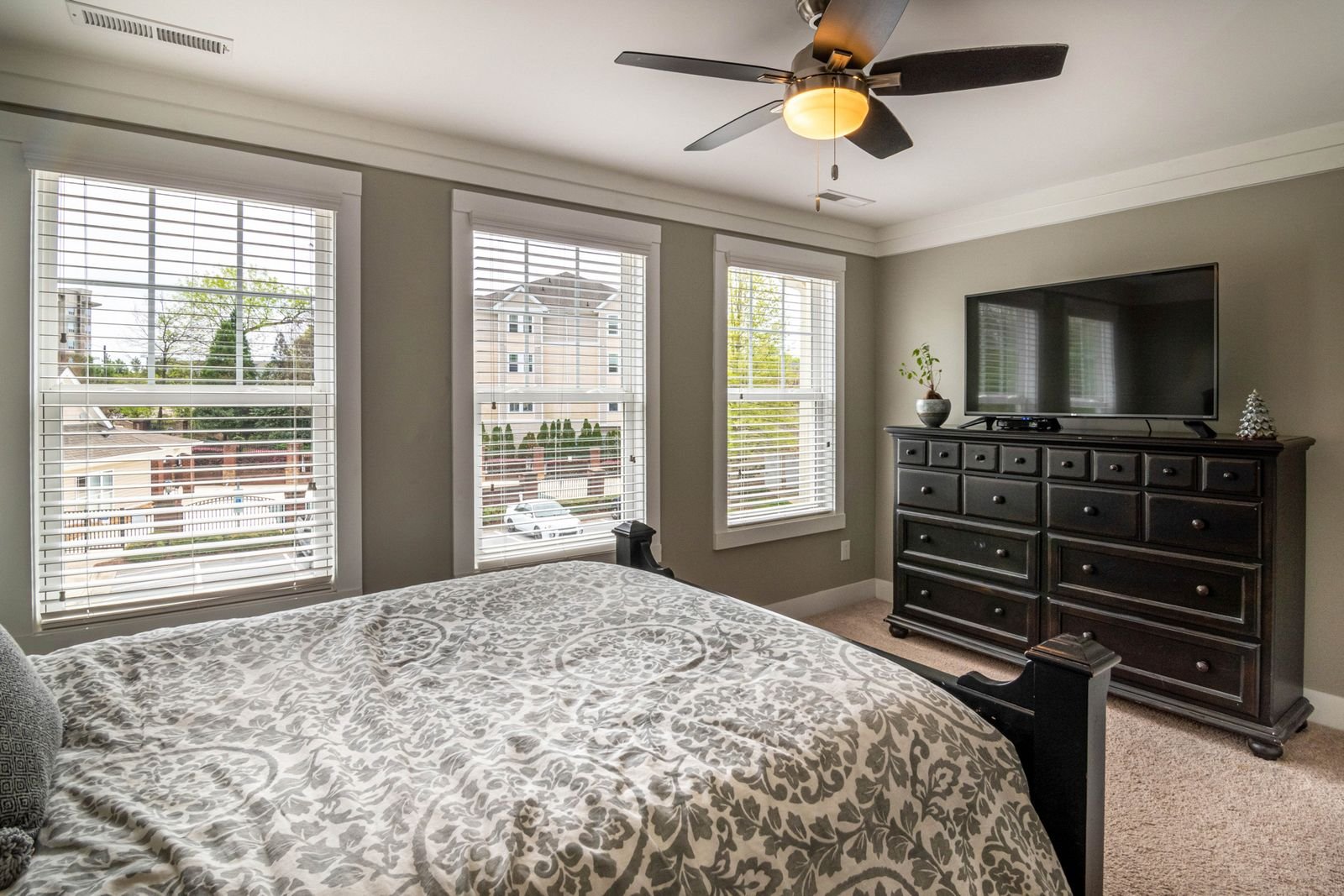
- If you have a ceiling fan, set it to spin counterclockwise in summer so it pushes air down onto you.
- Close the windows again before the morning heat builds.
A bowl of ice in front of a fan feels nice for a short while, but the effect is small and fades as the ice melts.
How do you use a fan at night without waking up cold?
The chill after a night sweat is often what keeps you awake. A sample setup that works for many women:
- At bedtime: fan on low, aimed at your upper body, timer set for two or three hours, remote on the nightstand.
- When a sweat hits: turn it up for a few minutes, push the blanket off, and flip your pillow to the cool side.
- Once it passes: drop back to low or turn it off, and pull a light blanket back over you.
Breathable bedding and sleepwear make this work much better. Our guide on how to sleep cool with night sweats covers the rest of the bedroom.
What fan safety basics should you know?
- Plug fans straight into the wall when you can, and never run cords under rugs or bedding.
- Keep fans away from water, sinks, and damp bathrooms unless the fan is made for that.
- Dust the grille and blades every few weeks. Built-up dust makes fans louder and less effective.
- Charge rechargeable fans with the cable they came with, on a hard surface, never under a pillow. Stop using any fan whose battery swells or gets hot.
- Keep long hair and loose scarves clear of bladed neck and handheld fans.
- Check for safety recalls when you register a new fan.
Is a fan or air conditioning better for hot flashes?
They do different jobs. Air conditioning lowers the room temperature, so fewer flashes feel unbearable. A fan gives you instant, targeted relief when one hits. Many women use both: a cooler room overall and a fan by the bed. If you cannot run air conditioning at night, a good fan plus cross-ventilation is the next best thing. For more gear ideas, see cooling gear worth buying.
Want to see fans tested for hot flashes?
The Sis, It's The Pause channel tests four fans for hot flashes and picks a favorite.
Which fans do we recommend?
One pick for each of the most common situations: the bedroom, a bigger room, a headboard or desk, and your bag.
- DREO Tower Fan: A slim oscillating tower fan for the bedside, for women who want gentle, spread-out airflow across the bed. Check the listing for the remote and timer features you want. Check price on Amazon
- Vornado 630 Air Circulator: A compact circulator that moves air across a whole room, a good choice if a small fan never seems to reach the bed. It is more about airflow than extras. Check price on Amazon
- Genesis Clip Fan: An inexpensive clip fan for a headboard, shelf, or desk edge, so air lands right on your face. A handy second fan if your partner wants less airflow. Check price on Amazon
- SWEETFULL Rechargeable Handheld Fan: A small rechargeable fan for your purse or desk drawer, for flashes in meetings, the car, or a checkout line. Check price on Amazon
When should you see a doctor?
A fan helps you ride out hot flashes, but some symptoms need a closer look. See a doctor if sweats come with fever, unexplained weight loss, or swollen glands, if they began after a new medicine, or if hot flashes keep you from sleeping or working. Seek urgent care for signs of heat illness, such as confusion, fainting, or a very high body temperature. In the moment, these tips on what to do during a hot flash can help.
Frequently asked questions
Is it safe to sleep with a fan on all night?
For most people, yes, as long as the fan is in good condition and the cord is out of the way. Some people wake with dry eyes, a dry throat, or stiff muscles from air blowing on them all night. A timer or a lower setting usually solves that.
Do bladeless fans cool better?
Not necessarily. Bladeless fans are easier to clean and safer around fingers and hair, but they do not cool you more than a bladed fan with similar airflow. They often cost more for the same breeze.
Can a fan make hot flashes worse?
A fan will not cause hot flashes. The main downside is the chill afterward, especially if you fall asleep with it on high while damp. Turning it down once the flash passes avoids that.
How do you keep a fan quiet?
Set it on a level, solid surface, clean the dust out regularly, and use the lowest speed that still feels good. A rattle that starts suddenly can mean a loose part, so check it before you keep using the fan.
Are neck fans worth it?
They are handy for walks, chores, and errands when you need both hands. They are less useful at a desk or in bed, where a clip or tower fan works better.
Sources and further reading
- Hot Flashes, Cleveland Clinic
- Night Sweats, Cleveland Clinic
- Menopause symptoms and relief, Office on Women’s Health, HHS
- Heat emergencies, MedlinePlus Medical Encyclopedia
- Sweating, MedlinePlus, National Library of Medicine
A quick note: this is general health information, not medical advice. Talk with your doctor before starting, stopping, or changing any treatment.